You know you need rest.
You know you can’t keep saying yes to everything.
And yet – when someone asks for just one more thing, the guilt creeps in.
Even when your body is tired…
Even when your gut says no…
The word doesn’t come out.
Instead, you smile.
You say yes.
And somewhere deep inside, your soul whispers: Please don’t.
If you’ve ever walked away from a conversation wondering,
“Why saying ‘no’ feels soooo hard?”
You are not alone.
It’s not just you – and it’s not just about boundaries.
It’s about who you were taught to be.
Because for many of us, saying no doesn’t feel like a decision — it feels like a betrayal.
Of love. Of loyalty. Of the role we’ve been trained to play.
If you’ve ever felt selfish, rude, or afraid of disappointing someone simply for trying to protect your time or energy…
This is for you.
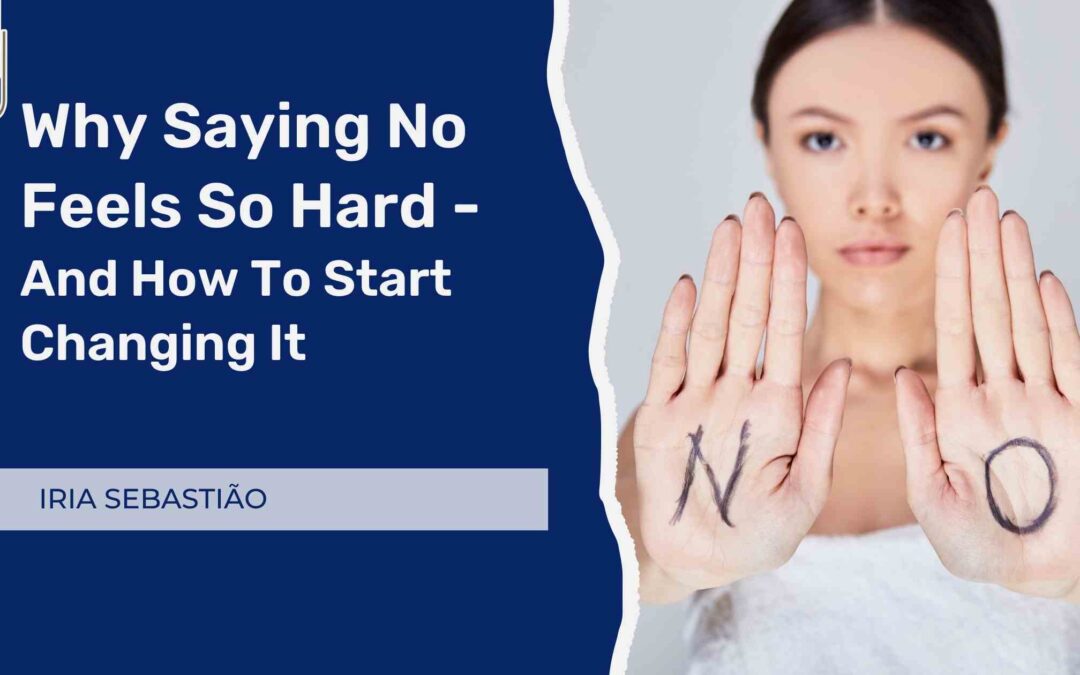
Let’s unpack why saying ‘no’ feels so hard – and how to start changing it.
🌱 The Root of Guilt: Where People-Pleasing Begins
You weren’t born with guilt.
You were conditioned into it.
From a young age, many of us were rewarded for being agreeable, helpful, and accommodating.
We were taught that love is earned through sacrifice.
That being “good” means being available, useful, pleasing – even at our own expense.
So when you say no now, as an adult, your nervous system doesn’t feel peace – it feels danger.
Danger of rejection.
Danger of being seen as difficult.
Danger of losing connection.
But here’s the truth:
Self-sacrifice is not love.
And people-pleasing is not peacekeeping, it’s self-abandonment wearing a polite smile.
Why Saying ‘No’ Feels Like Rejection (And How to Set Loving Boundaries)
Let’s reframe what boundaries actually are.
Boundaries are not walls to push people away.
They’re bridges – loving, clear invitations that make real and healthy connections possible.
You deserve relationships that don’t require your exhaustion as proof of your love.
You deserve rest, solitude, space – without guilt riding shotgun.
Here’s what I want you to remember:
✅ Saying no doesn’t make you unkind. It makes you honest.
✅ Guilt is not a reliable compass. It reflects old conditioning.
✅ Your energy is sacred. If you don’t protect it, who will?
✅ Boundaries don’t create distance. They create clarity and trust, and healthy relationships.
The next time you feel guilt rise as you set a boundary, ask:
“Is this guilt a sign I’ve done something wrong, or just that I’m doing something new?”
“Is this guilt a fear to make others uncomfortable or reactive?
✨ Reflection Prompts – The Seeds Toward Meaningful Change
Take 10 minutes – a pause in your day, just for you – and gently explore the questions below.
These aren’t here to fix you. They’re here to help you meet yourself with clarity, softness, and truth.
Because healing from people-pleasing begins with honest witnessing.
This gentle practice will help you:
- Uncover the root of your guilt conditioning
- Begin releasing fear around disappointing others
- Take small, empowered steps toward soulful self-respect
💭 Journal Prompts:
1. Where did I learn that saying no makes me selfish or unlovable?
Who taught you that pleasing others was safer than protecting yourself?
2. When have I said yes while my body or soul was saying no?
What did it cost you? What did it protect?
3. What am I afraid will happen if I disappoint someone?
Be honest: is it conflict, rejection, or being misunderstood?
4. What would it look like to honor my “no” with grace, not guilt?
What might shift in your energy, your relationships, your sense of self?
💬 Let this be a moment of radical honesty, not self-blame.
You’re not unkind. You’re not broken. You’re reclaiming your boundaries.
Write not to justify. Write to remember who you are.
And that remembering? That’s the beginning of liberation.
🌉 You Were Not Born to Please – You Were Born to Belong
You don’t have to be everything for everyone.
You don’t have to say yes to stay loved.
And you’re not here to live in quiet resentment just to avoid rocking the boat.
You were not born to please.
You were born to belong – first and foremost, to yourself.
With fierce compassion,
Iria Sebastião
Catalyst for Personal Change 🌀✨
❓FAQ: Saying No Without Guilt
Q: Why do I feel bad for setting boundaries?
A: Guilt often comes from early conditioning – if you were rewarded for self-sacrifice or punished for asserting needs, saying no can feel unsafe.
Q: How do I stop feeling guilty after saying no?
A: Practice naming the guilt without obeying it. Guilt doesn’t mean you’re wrong – it often means you’re growing beyond your old programming.
Q: Can boundaries actually improve my relationships?
A: Yes. Healthy boundaries foster clarity, mutual respect, and emotional safety, which allows deeper, more authentic connections.
🔗 Want to Go Deeper?
If this spoke to you…
If you’re ready to start saying no without spiraling in guilt…
The Set Boundaries Without Guilt Mini Course is your next gentle step.
✨ It’s not another self-help fix – it’s a space for self-reclamation and deep transformation if you’re open to it.
Recent Comments